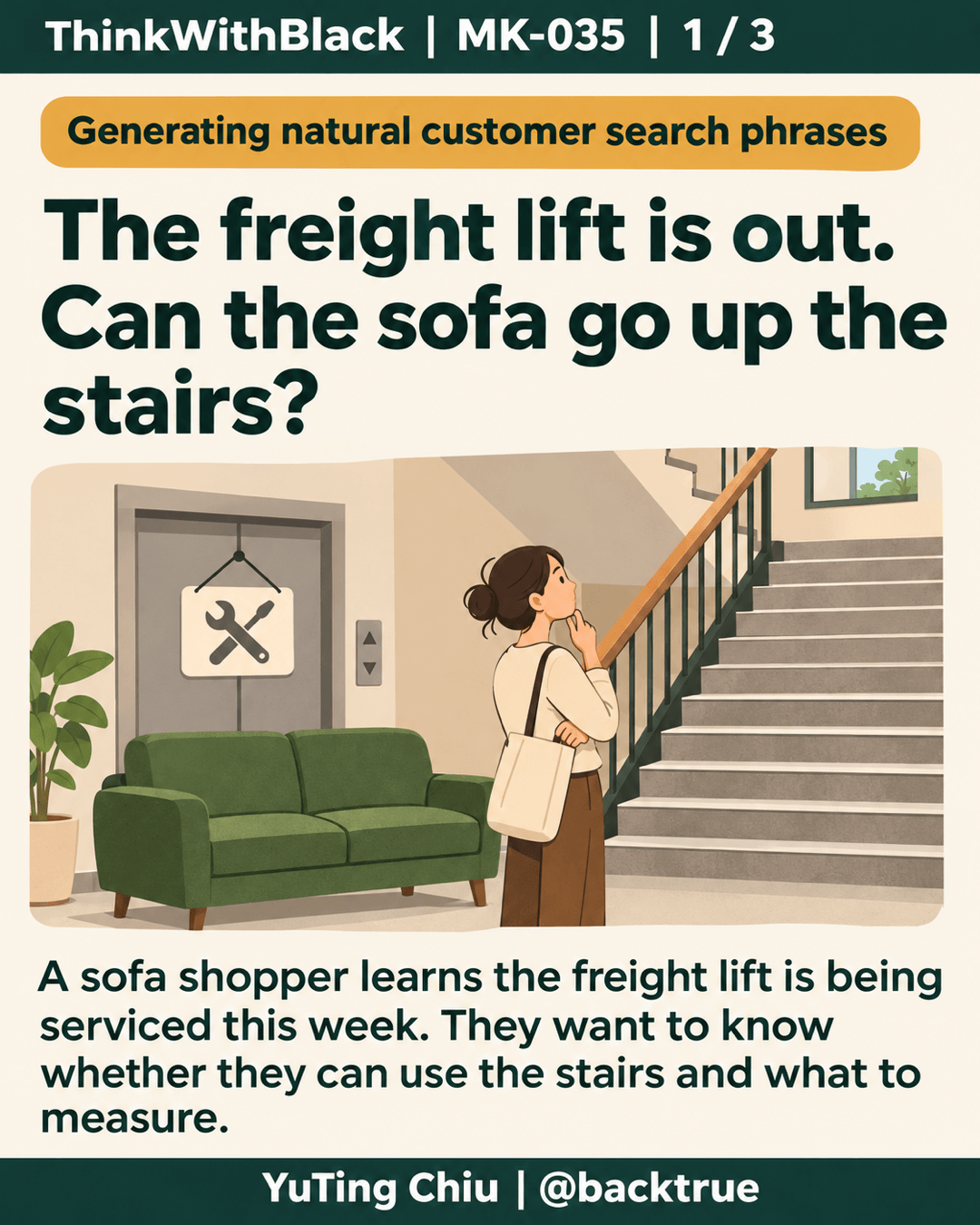
Say a furniture shop is planning search ads for its sofas. The marketing team starts with phrases like “premium sofas” and “home delivery” and plans to send people to the product listing. Then someone asks customer service, “I’m thinking of replacing my sofa, but the building manager says the freight lift is being serviced this week. Can a sofa go up the stairs? What should I measure?”
The product listing gives that shopper a way to compare designs. The question they need answered first is how to get a sofa into the flat. If the page gives them no way to check, they have to look elsewhere or ask support. The marketing team can use the question it already has to start a list of phrases to check against actual searches.
Keep the shopper’s words and the job they have to do
In my first Google Ads lesson, slide 4 shows how noticing a musty smell in clothes can lead to a search about the wardrobe. Slide 6 asks learners to identify what happened and write the search that might follow. MK-035, Generating natural customer search phrases, applies that exercise to a customer’s wording.
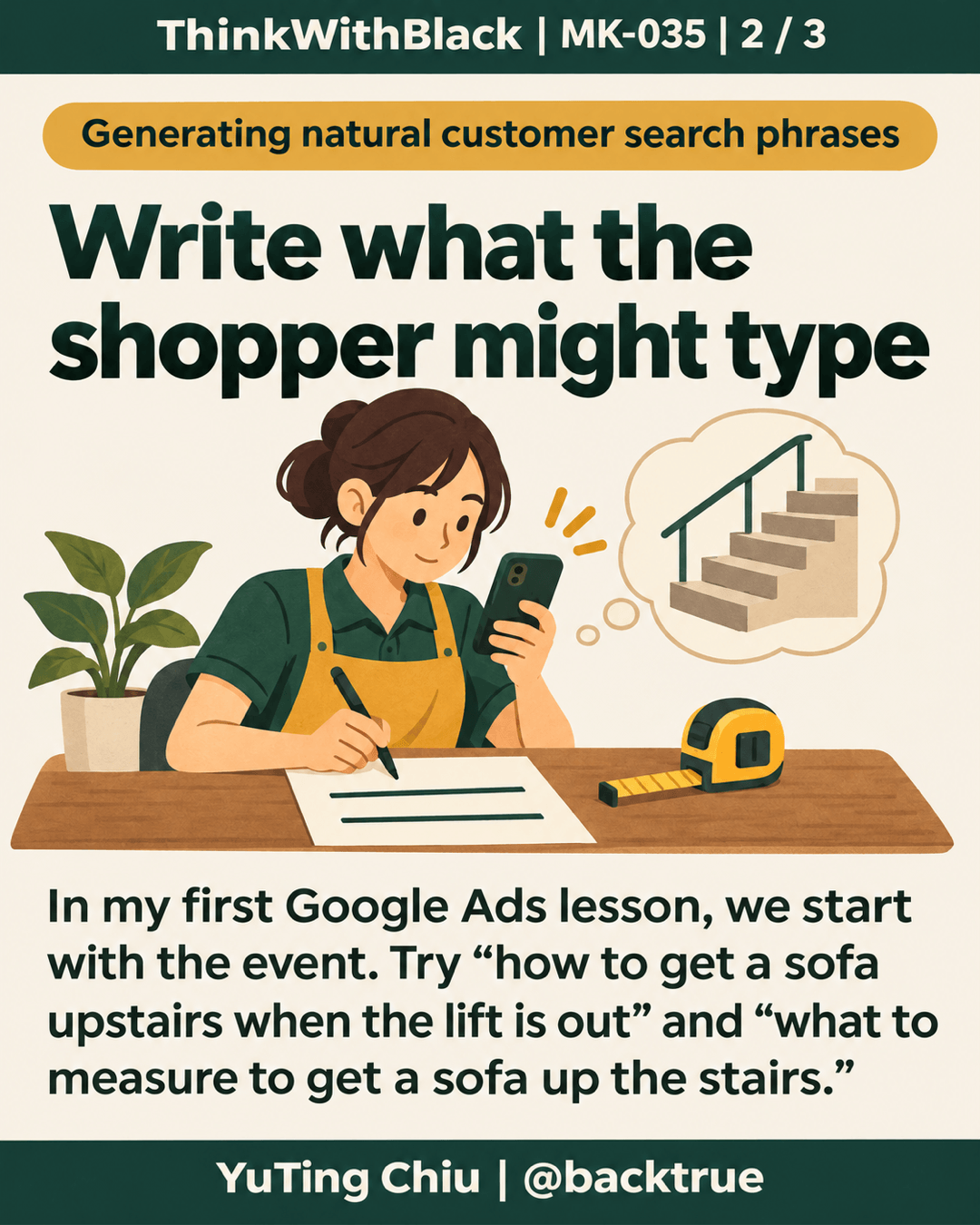
Start with the event and the job. The lift is out this week, and the shopper is trying to work out if a sofa can go up the stairs. Write a phrase that keeps that situation, such as “how to get a sofa upstairs when the lift is out.” Then try one that keeps the immediate task, such as “what to measure to get a sofa up the stairs.” Both are things someone could look up while considering a purchase.
Give each candidate a source and a way to check it
Say the shop’s delivery page already lists the dimensions of each sofa, and support can collect photos and stairway measurements for the delivery team to review. Keep the customer’s message alongside the two phrases and the page. The following table shows how MK-035 records that work.
| MK-035 field | Sofa delivery example |
|---|---|
| Customer wording and source | The customer service question about the freight lift, the stairs and what to measure |
| Event and job | The freight lift is being serviced this week. The shopper wants to check a route upstairs |
| Actual candidate search phrase | “how to get a sofa upstairs when the lift is out” and “what to measure to get a sofa up the stairs” |
| Wording and intent rationale | The first keeps the reason for using the stairs. The second keeps the practical task of measuring |
| Observed or hypothesized | The message is the starting evidence in this example. Both search phrases are candidates awaiting validation |
| Destination page and action | Use the delivery information page. Ask for stairway photos and measurements if the delivery team can review them |
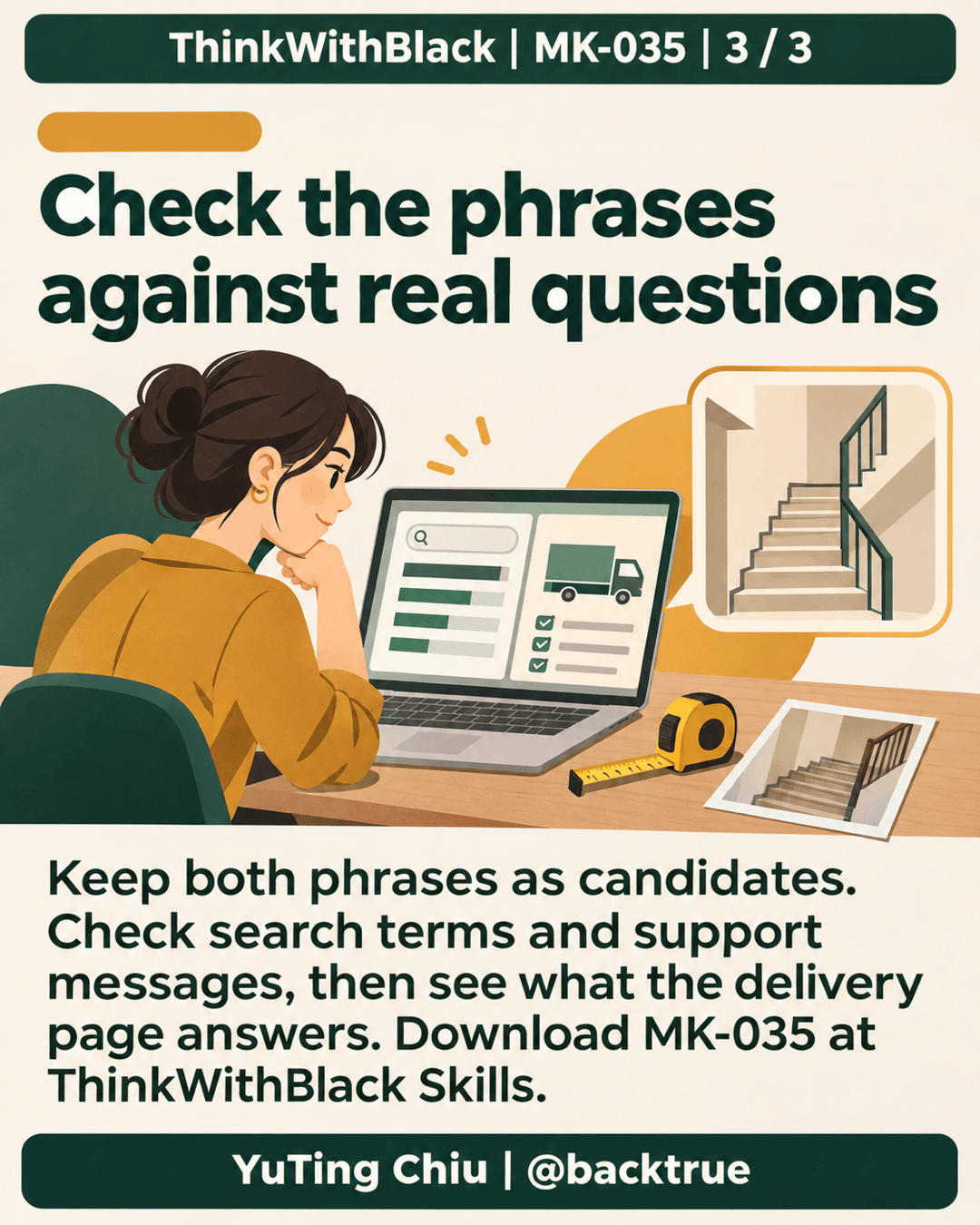
| Validation data | Look for similar wording in search term reports and other customer service messages. Check what the delivery page already answers |
Use the list to decide what to check first
Give the list to the people who work on search ads and the delivery page. They can check whether people use similar wording, and whether the page answers the question behind it. If several shoppers ask what to measure, the page could put stairway measurements next to the sofa dimensions and tell readers how to request a review. The delivery team can then assess the actual route using the photos and measurements it receives.
Take a recent support message and try the same steps. Write down what happened, what the person wants to do and two ways they might search for help. Keep the original message next to both candidates so someone else can check why you wrote them. Download the full MK-035 method at ThinkWithBlack Skills.
This Skill on social media
Choose a platform to view the infographic and post