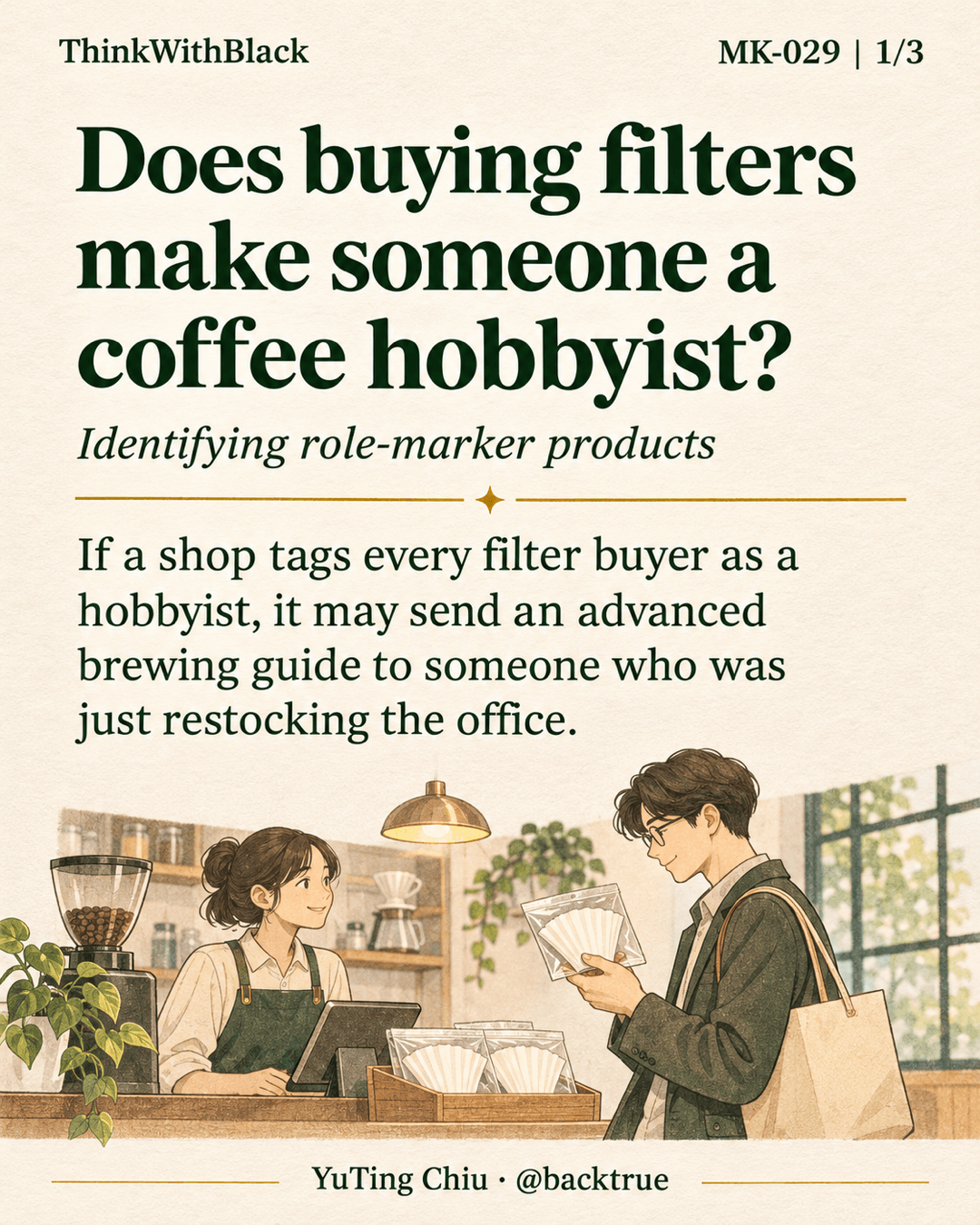
Say a coffee supply shop is preparing an email for its members. Filters are its bestseller, so the team tags every filter buyer as a coffee hobbyist and sends them a guide to water temperature and pouring technique. Some recipients brew at home and can use the guide. Someone who restocks the office, though, needs to check which filters fit the dripper and how many come in a pack. They still have to ask customer service.
The team wanted to use its orders to make better decisions about whom to contact. It ended up treating the product, the buyer and the user as one piece of information. The next bestseller will create the same problem if the team starts from the sales ranking. I would start with what the purchase suggests about how someone uses the product, then check who actually uses it.
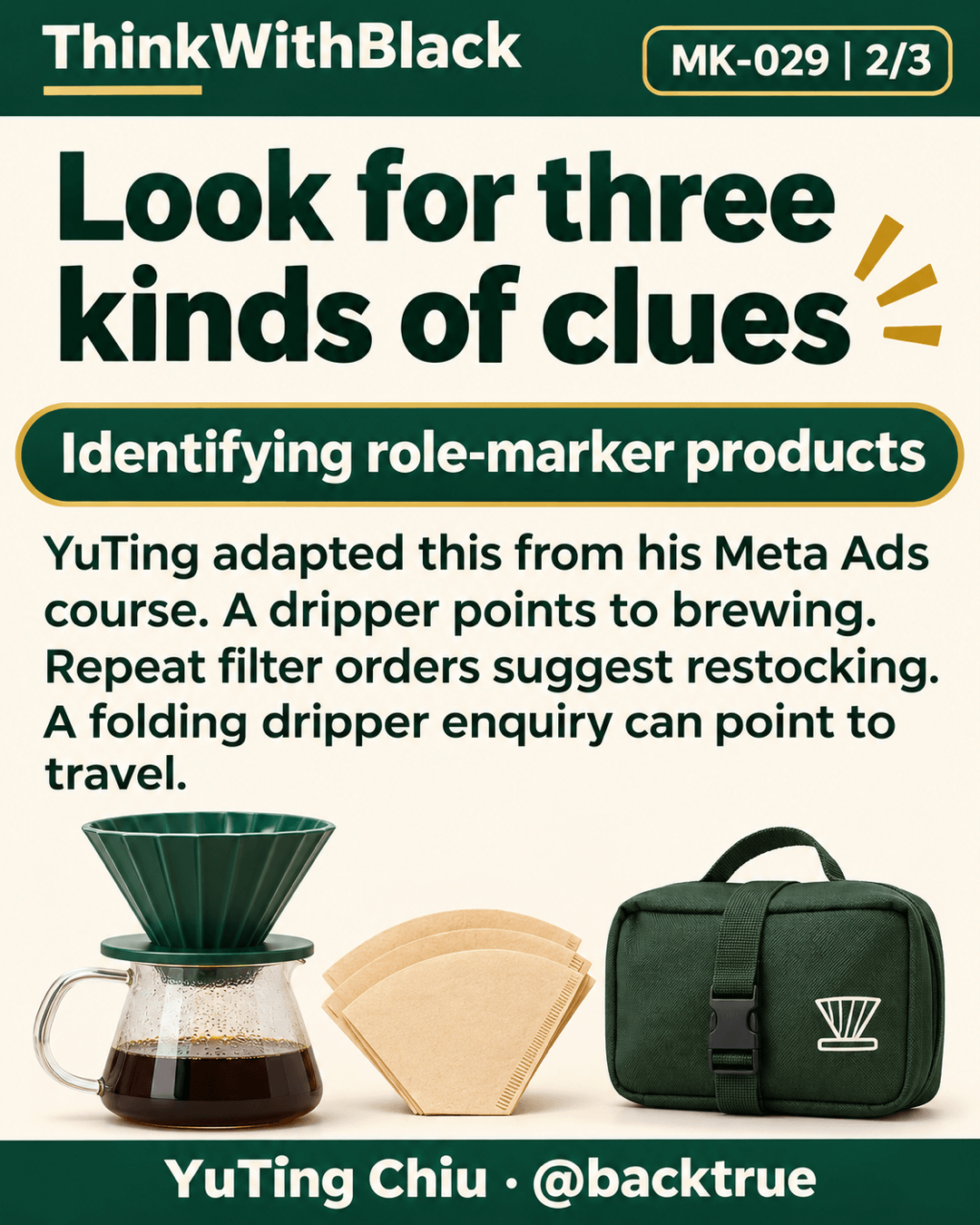
Look for three kinds of clues
I put together MK-029, Identifying role-marker products, from the section on customer roles in my Meta Ads course materials. The lesson uses products to think through how a buyer might use them. The method pack separates three kinds of clues and checks for gifts, purchases on someone else’s behalf and use by another person.
Start with what the product does. A dripper points to brewing coffee. It gives you a reason to offer instructions for that model once you know whether the buyer uses it, bought it as a gift or ordered it for the office.
Look at what the buyer replaces. Several orders for the same filters suggest ongoing restocking. The purchase record can support a candidate group. A question about who brews the coffee can distinguish a home habit from routine office purchasing.
Check where the person plans to use it. If someone asks whether a folding dripper will fit in a travel bag, you have a clue about this purchase. Ask what they need to carry and when. You can then explain the packed size for the model they are considering.
Separate the person who orders from the person who brews
For example, a member account has orders for a dripper and several packs of compatible filters. A support note says, “How small does the folding dripper get? I want to take it on a work trip next week.” I would keep home brewing and office restocking as two possibilities. I would record the work trip as a clue about the folding dripper enquiry.
| MK-029 field | Possible home brewer | Possible office buyer |
|---|---|---|
| Hypothesised group | Brews with this model at home | Restocks filters for a team |
| Buying and using roles | Account placed the order, user to confirm | Account may buy for colleagues |
| Trigger situation | Filters ran out at home | Office pantry needs another pack |
| Tasks and concerns | Buy compatible filters and learn the setup | Buy the correct size and quantity for others |
| Supporting clues | Dripper order and repeated purchases of compatible filters | Repeated orders fit office restocking, with use still to confirm |
| Counterexamples | The dripper and filters could be for someone else | The buyer may brew at home and use an office delivery address |
| Items to validate | Ask whether this buyer regularly uses the model | Ask whether the buyer restocks for work and which model and pack size they need |
| Suitable message | After confirming home use, send the guide for the model | After confirming office use, send compatibility and pack details |
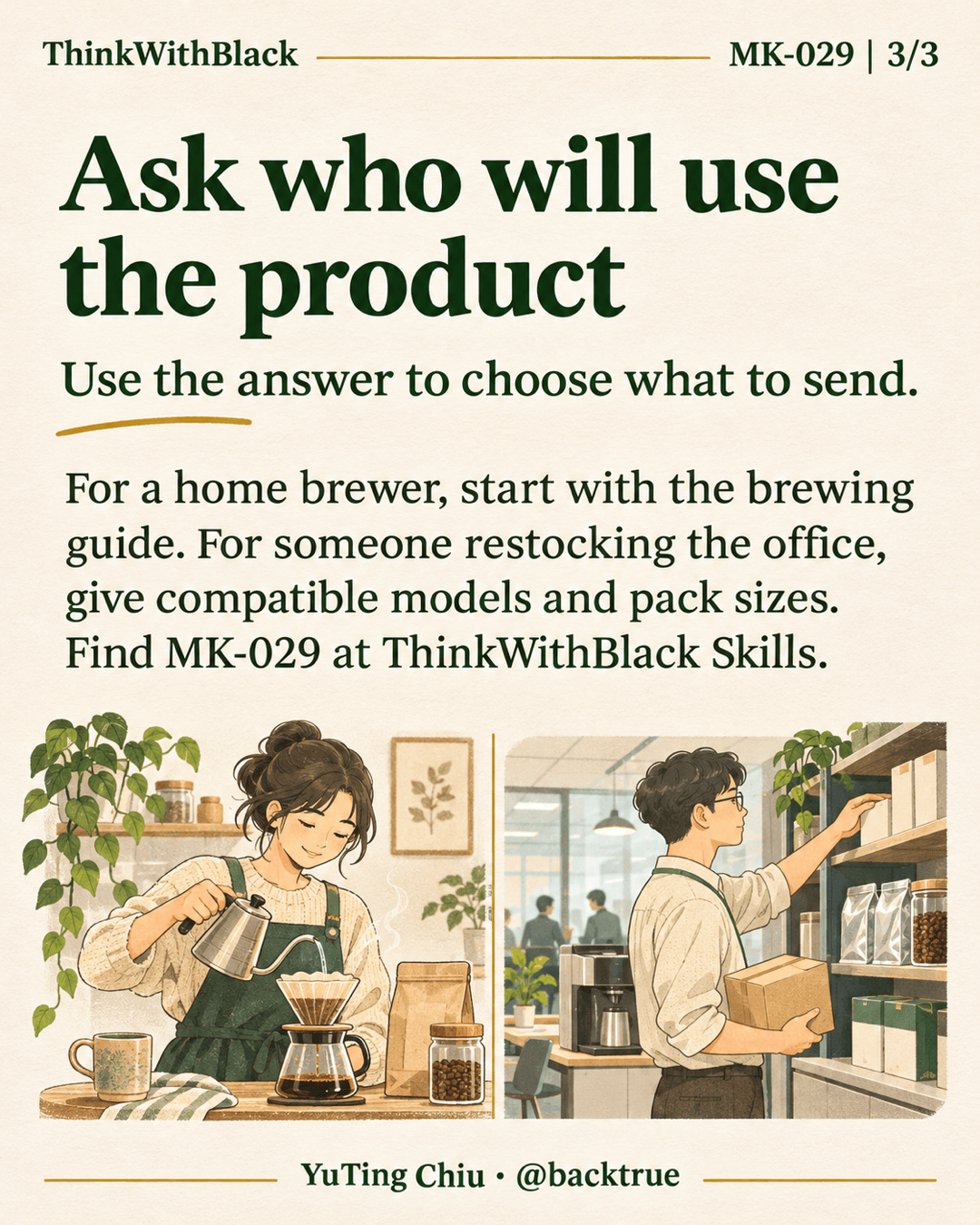
A support rep can ask, “Are these filters for your own setup or are you restocking for work? Which dripper do you use?” Once the buyer confirms home use, the rep can offer the guide for their model and experience level. For office purchasing, start with fit and pack size. Answer the travel question with the folding dripper’s actual packed dimensions.
A slow seller can provide a clearer clue than a bestseller. If several people ask how a folding dripper packs for a trip, that gives the team a particular use to check. Keep those enquiries with the evidence and counterexamples in the same table. The next person can see why a segment was proposed and what new evidence would change it.
Download the English MK-029 method from ThinkWithBlack Skills. Pick one product and a few orders with personal details removed. Add a support question and write down what the product suggests, who might be using it and what the team should ask before sending the next email.
The method in three cards
This Skill on social media
Choose a platform to view the infographic and post