Say a tea shop runs a discount for people shopping for housewarming gifts. Customers keep asking whether there's a gift bag and whether the tea can arrive by Saturday. A shopper may like the tea and still hesitate. They need something they can bring to a friend's new home on Saturday. If they have to find packaging or wait until after the visit, they still need a gift they can bring that day.
I use MK-026, Occasion-based scenario angles, to ask what the shopper needs the product for. The method comes from the Occasion section of my course materials on planning products and product lines. It draws on Time, Place, and Occasion, or T.P.O. Think about the same tea bought to drink at home, to bring when visiting friends, or to give at a housewarming. The occasion shapes what shoppers ask about and which offers they consider.
Keep the reason for buying with the product record
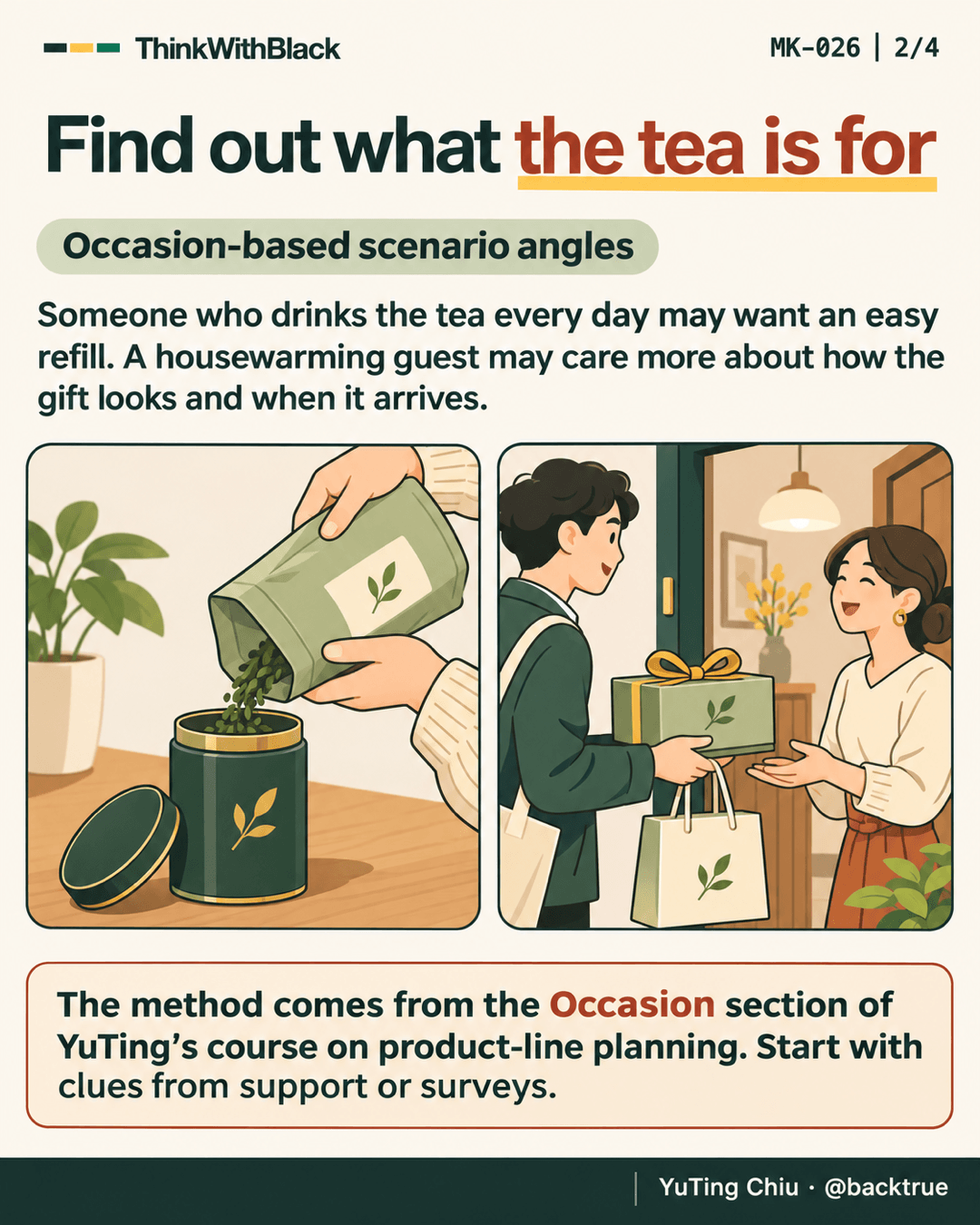
Start with the facts about one tea, including its packaging and delivery options. Then check existing customer information, support notes, or surveys. Someone might ask whether they can order a refill when their tin is empty. Another shopper might say they're going to a housewarming and ask whether the box comes with a bag. Keep both possibilities on the table, everyday refills and gifts needed for a particular date.
An order with a gift bag could be for personal use. Someone might buy a refill to share. Record the buyer and the person who will drink the tea separately. If you only know what someone ordered, leave the intended use open. You can ask whether it's for them, a gift, or something else. Follow up by asking when they need it and what would stop them from ordering.
Record the clues and the questions they leave open
The eight fields below show how to keep the clues with each proposed occasion. A teammate can see where the offer came from and what they'd need to find out next.
| Field | Everyday tea | Housewarming gift |
|---|---|---|
| Hypothesized group | People restocking a tea they drink regularly | People bringing a gift to a housewarming |
| Buying and using roles | The person asking about refills may drink the tea, but their intended use is unknown | The person asking may give the gift. Who drinks the tea is unknown |
| Trigger situation | Their tea is almost gone | They have a date to visit a friend's new home |
| Tasks and concerns | Restock the tea and find out if it comes without a new tin | Bring a present on time and have a bag to carry it in |
| Supporting clues | A question about buying the refill by itself | The shopper mentions a housewarming and asks about a bag and delivery |
| Counterexamples | People may also buy refills to share | People may ask for a bag to carry something they bought for themselves |
| Items to validate | Do they want a single refill or two packs together? | How much would they pay for the gift box and bag? Does the arrival date change their choice? |
| Suitable message | Show how much tea is in the refill and how to reorder it | Show what's in the gift box and explain the bag and confirmed shipping terms |
Put the bundle, price, and reason to buy in the annual plan
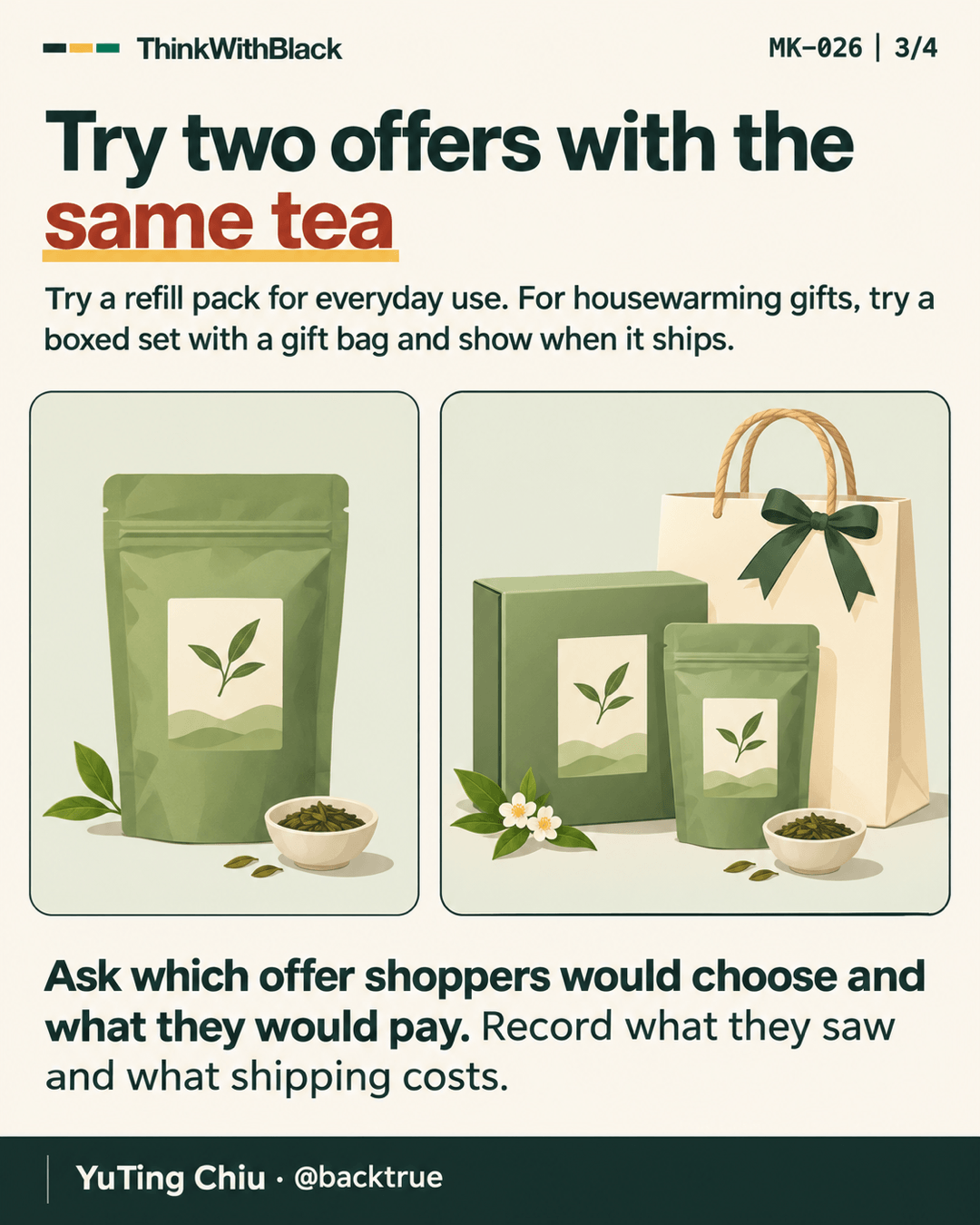
For everyday use, try selling the refill by itself and show the quantity and how to reorder. For a housewarming, try the same tea in a gift box with a bag. Show when it ships and the delivery terms. Check with the shipping team which dates and destinations you can serve before you promise an arrival date.
When you ask what shoppers would buy and what they'd pay, record the bundle, price, shipping fee, and delivery terms they saw. Ask which part mattered to them. If they like the box but keep ruling it out because of when it would arrive, check the shipping plan before revising the packaging or price.
Give everyday refills and gifting separate entries in your annual plan. For the refill, note the pack, price to test, reason to reorder, and choices you'll record. For gifting, add a period when you can test the gift box, the price to test, what makes it easier to give, and the delivery terms. Mark the prices as open until you have cost information and answers from shoppers. When you plan another campaign, you can check when shoppers asked for this kind of offer and what they cared about.
Try it with a product you sell
Download MK-026 from ThinkWithBlack Skills. Give your AI assistant the product facts and customer notes with personal details removed. Ask it to fill the eight fields for two occasions, keep any clues that don't fit, and add two offers to test to your annual plan. Pick one to try and bring what you learn back to the record.
This Skill on social media
Choose a platform to view the infographic and post