When a team plans the next season's campaign, it often starts with customer service records. Those records tell you what happened at a particular time. Summarise them as “customers need this product” and the timing and reason for using it can disappear from the brief.
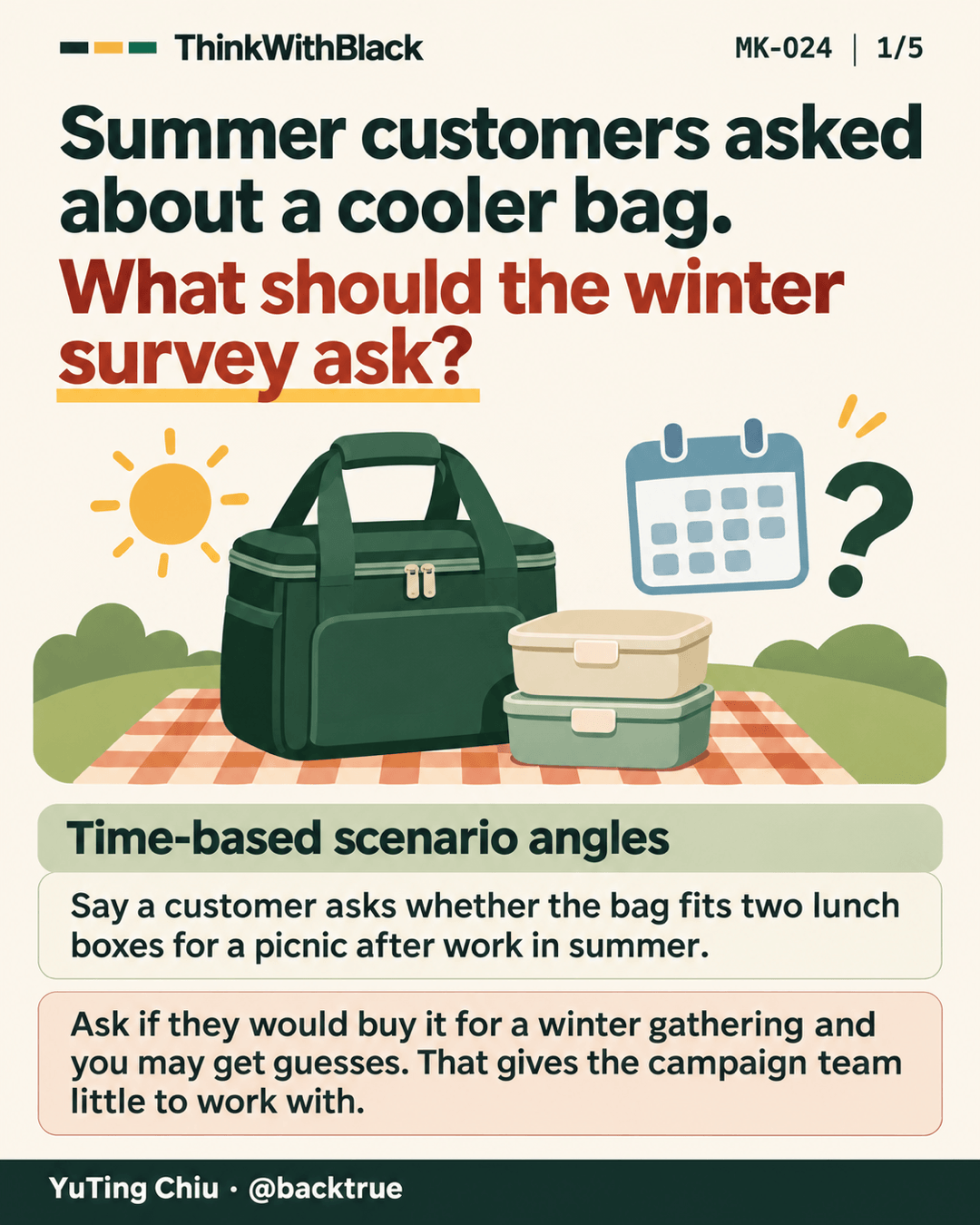
Suppose a shop sells a cooler bag that fits two lunch boxes. In summer, a customer takes two lunch boxes to a picnic after work and needs to keep them cold. They ask support whether the bag can hold both boxes for the next outing. When the team starts planning a winter campaign, it turns those notes into a survey. “Would you need a cooler bag for a winter gathering?” The next question asks what the customer would pay.
Some people might imagine a use for the bag. Others have never needed one at a winter gathering and pick the closest option anyway. The team gets choices and prices back, but it cannot tell who had a real need and who was responding to a scene the survey supplied. That makes it hard to decide what to say in the winter campaign or what to check first.
Ask about the last time it happened
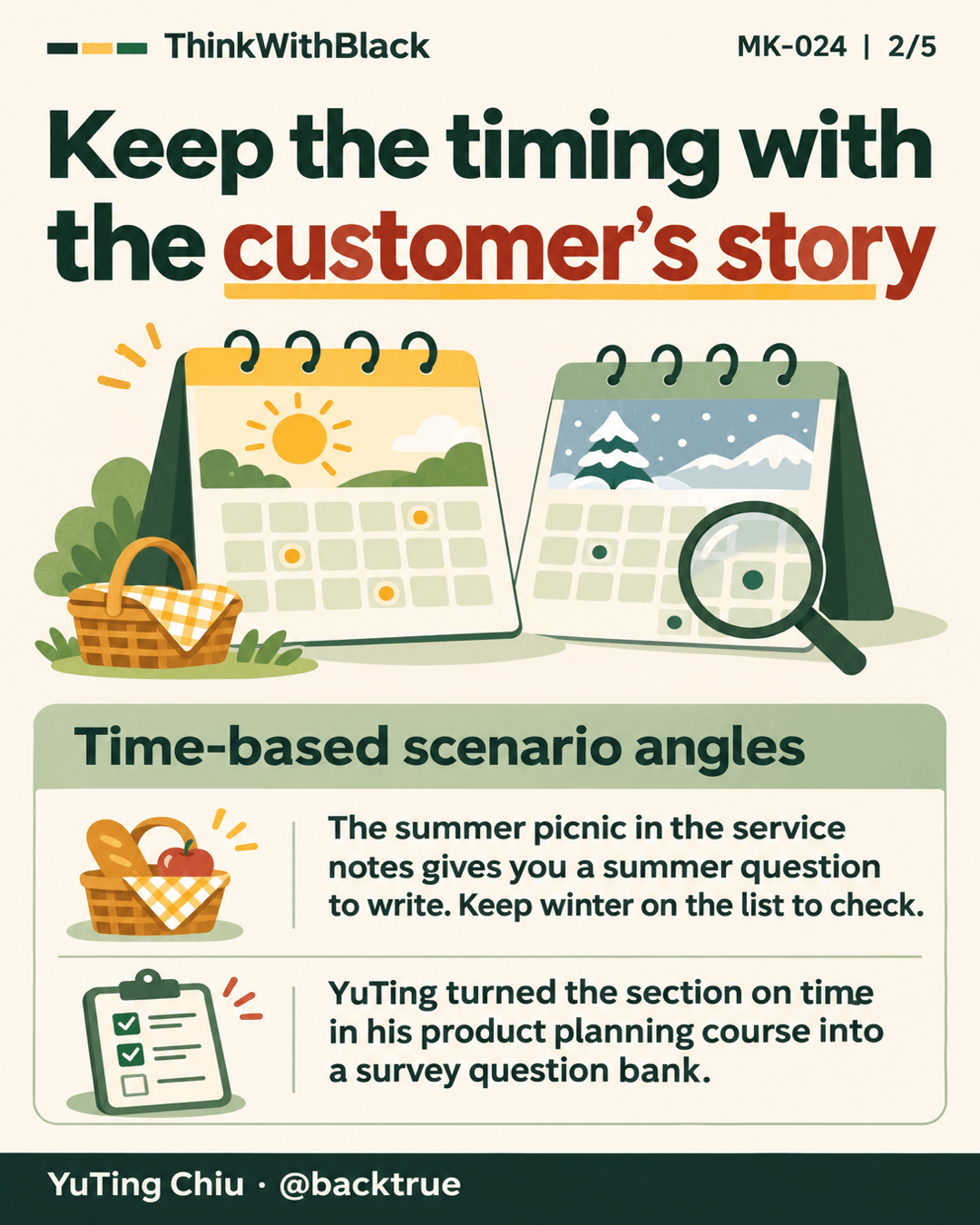
I start by keeping the timing, activity and need together in the service notes. Here, the record is about taking lunch boxes to a picnic after work in summer. That gives us a summer question to write. Whether something similar happens in winter can stay open until we have winter usage records.
That's the idea behind MK-024, Time-based scenario angles. I took the section on time from my course materials on planning products and product lines and turned it into a way to write survey questions. Ask about an event first. Then ask what the person did or chose. Put the price question in a separate step. Course source
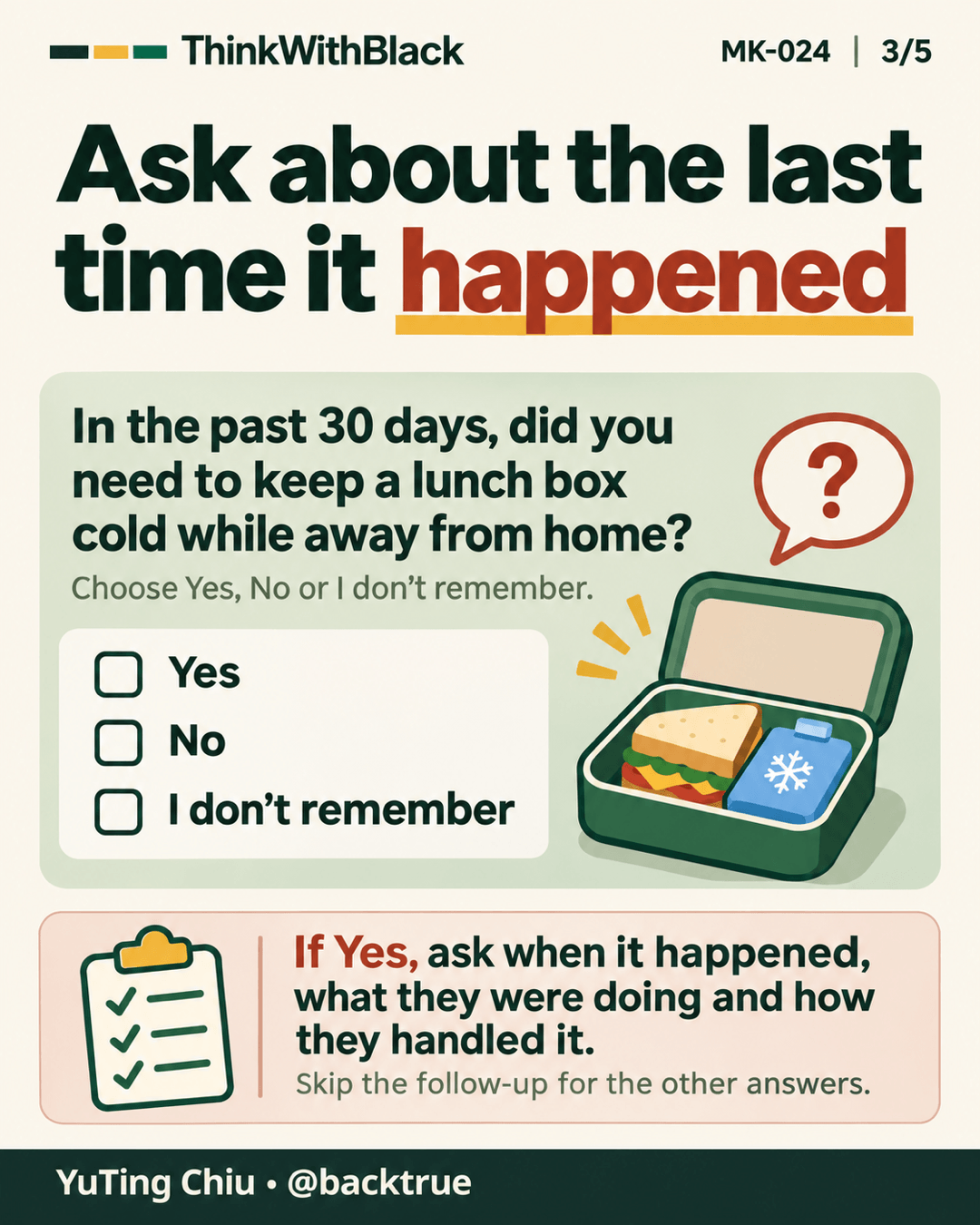
For the cooler bag, start with “In the past 30 days, did you need to keep a lunch box cold while away from home?” If the person says yes, ask when it last happened, what they were doing and how they handled it. Let them skip the follow-up if the answer is no. Include “I don't remember” so people can say when they are unsure.
The answers might include the picnic after work and other uses you had not considered. Start with an open question to capture what actually happened. Build choices from those accounts for the next survey, and keep track of which responses they came from.
Give the survey team a record it can use
The seven fields keep the question, the source and the follow-up together. Here's one version you could hand to the person building the summer survey.
| Field | Cooler bag survey example |
|---|---|
| Time or seasonal context | Bringing lunch boxes to an after-work picnic in summer. Winter gatherings are still to be tested |
| Actual question | In the past 30 days, did you need to keep a lunch box cold while away from home? When did that last happen? What were you doing and how did you handle it? |
| Response format and options | Choose yes, no or I don't remember. Follow yes with an open answer about the event and what they did |
| Respondents and recall period | Ask existing customers who have taken packed meals on outings. Run the survey in summer and ask about the past 30 days |
| Need and price questions | Ask about an actual event and the response first. Ask willingness to pay separately |
| Sources and hypotheses | A summer service record mentions an after-work picnic and two lunch boxes. Winter use remains open |
| Skip or follow-up conditions | Skip event details for no or I don't remember. Compare willingness to pay in winter and summer only with people who have experienced both situations, using the same product and conditions |
When does the price question belong?
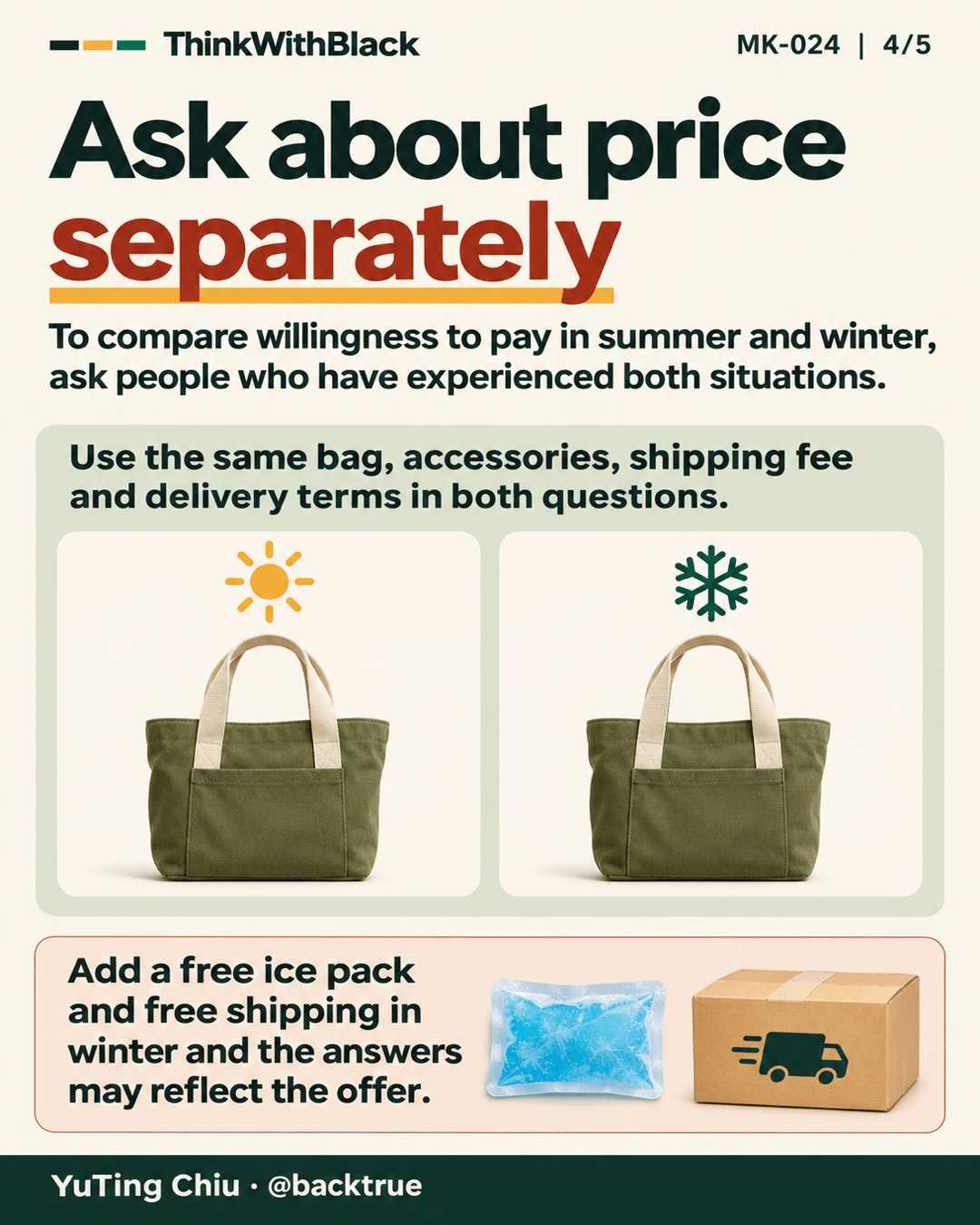
If the team wants to compare willingness to pay by season, it can ask people who have experienced both situations to answer separately. Show the same cooler bag, capacity, accessories, shipping fee and delivery conditions both times. Add a free ice pack and free shipping to the winter version and you will struggle to tell whether the change in price reflects the season or the offer.
With summer records alone, you can hand over a set of questions the team can use now and keep winter on the list to investigate. Review what people actually say before deciding which season or time of day to check next. The campaign team can then see which situation the evidence covers.
Try it with your own records
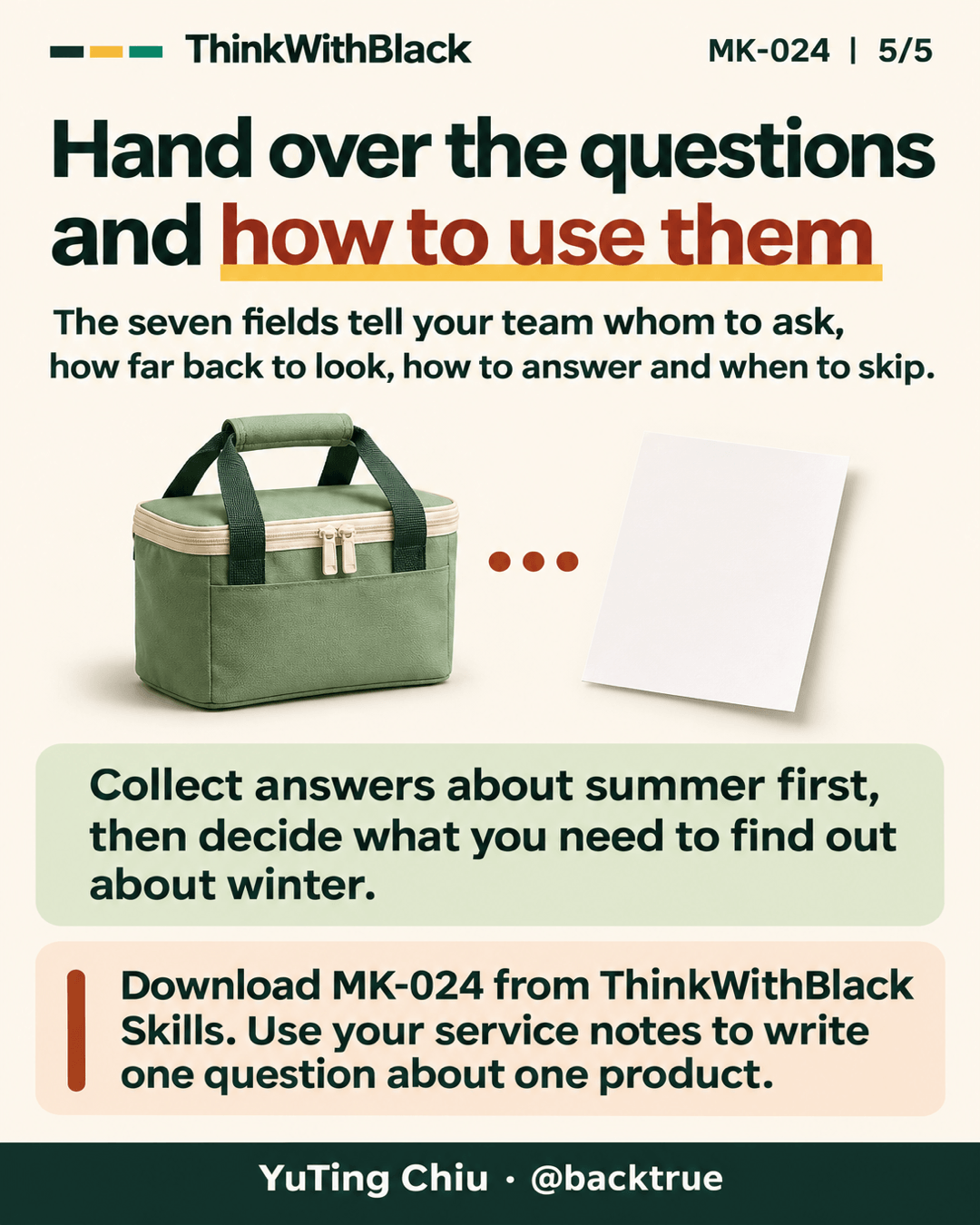
Download the MK-024 method from ThinkWithBlack Skills. Pick one product and bring customer information, surveys or service notes with personal details removed. Draft a question about the last time someone needed the product, then record how they can answer and when they should skip the follow-up. You'll have a starting point for checking another time or season.
This Skill on social media
Choose a platform to view the infographic and post