A customer asks whether a gift box can cost less. Service sends a discount, but the next question is about receiving everything early enough to check it before an event. The price has been answered; the preparation work has not. If the brief simply says “price-sensitive customer,” the next creative may put an even larger discount in front of the same unanswered question
I would return to the task and the choices the customer actually had. Asking about price does not tell us which trade-off will settle a decision. Paying more also needs an explanation of what the extra money bought
What matters to the next person on the team is whether the record can guide a service question or the opening of a product page. Labels such as “values quality” leave too much for that person to guess
MK-017, Interpreting customers’ core values, connects a proposed value priority to original remarks, feasible alternatives and actual choices. The output is a record the team can use to prepare a message and revise when new evidence arrives
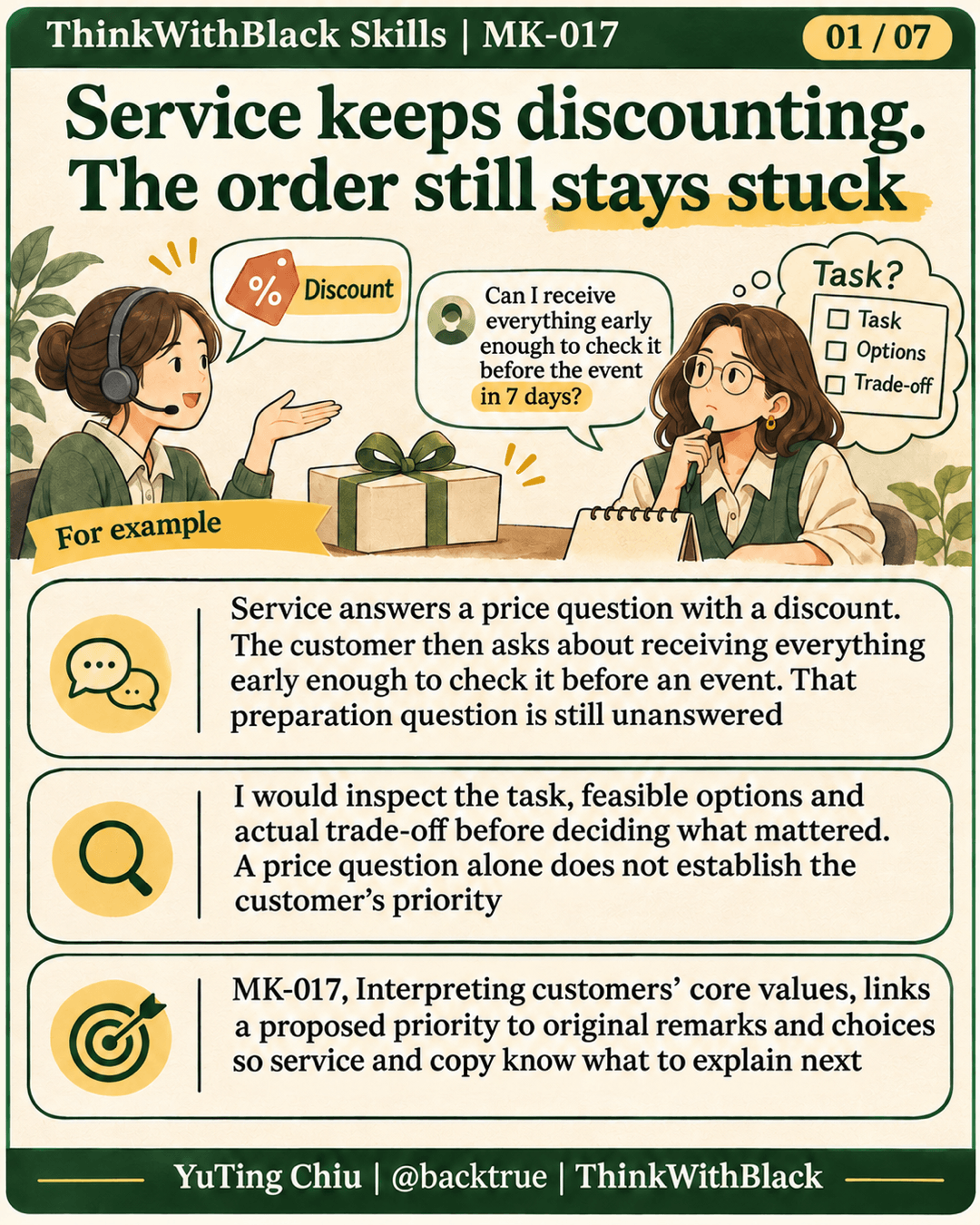
Keep the options as they were at the time
Price, quality, craftsmanship, brand, convenience and a product’s story can all be standards for judging value. To identify a priority in one purchase, preserve the alternatives and constraints before describing the person
For example, someone is buying one gift box for an event seven days away. The contents, quality and payment terms are the same. Both delivery options are in stock and available to order: standard delivery costs NT$1,200 in total, including shipping, and arrives in five days; express costs NT$1,500 in total and arrives the next day. Both meet the event deadline
In this example, the customer says: “The event is in seven days. I want everything here tomorrow so I can check it. Both are available, so please arrange the NT$1,500 option.” The corresponding order records that express option at NT$1,500
Together, those records show an extra NT$300 paid to receive the box earlier and leave time for checking. NT$1,500 − NT$1,200 = NT$300. Both quoted totals already include shipping
Keep the product version, totals, delivery arrangements, stock, payment terms, original words and matching order together. A note saying “bought the expensive one” loses the conditions needed to interpret the choice
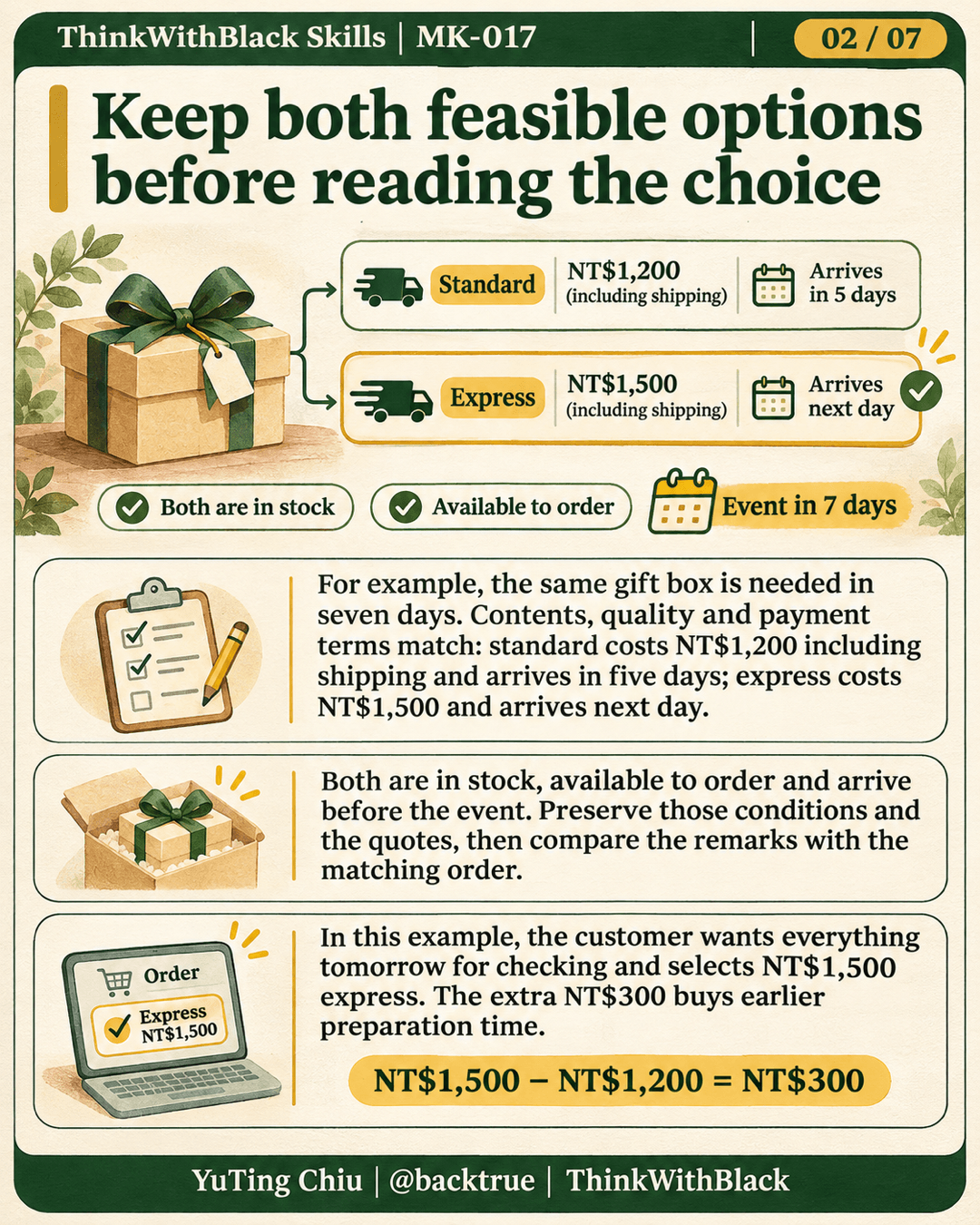
The extra payment buys preparation time in this purchase
Both options can be ordered and both arrive before the event. Under those conditions, the original words and recorded choice support a provisional reading: this purchase prioritises receiving the box early enough to complete the checking work in advance
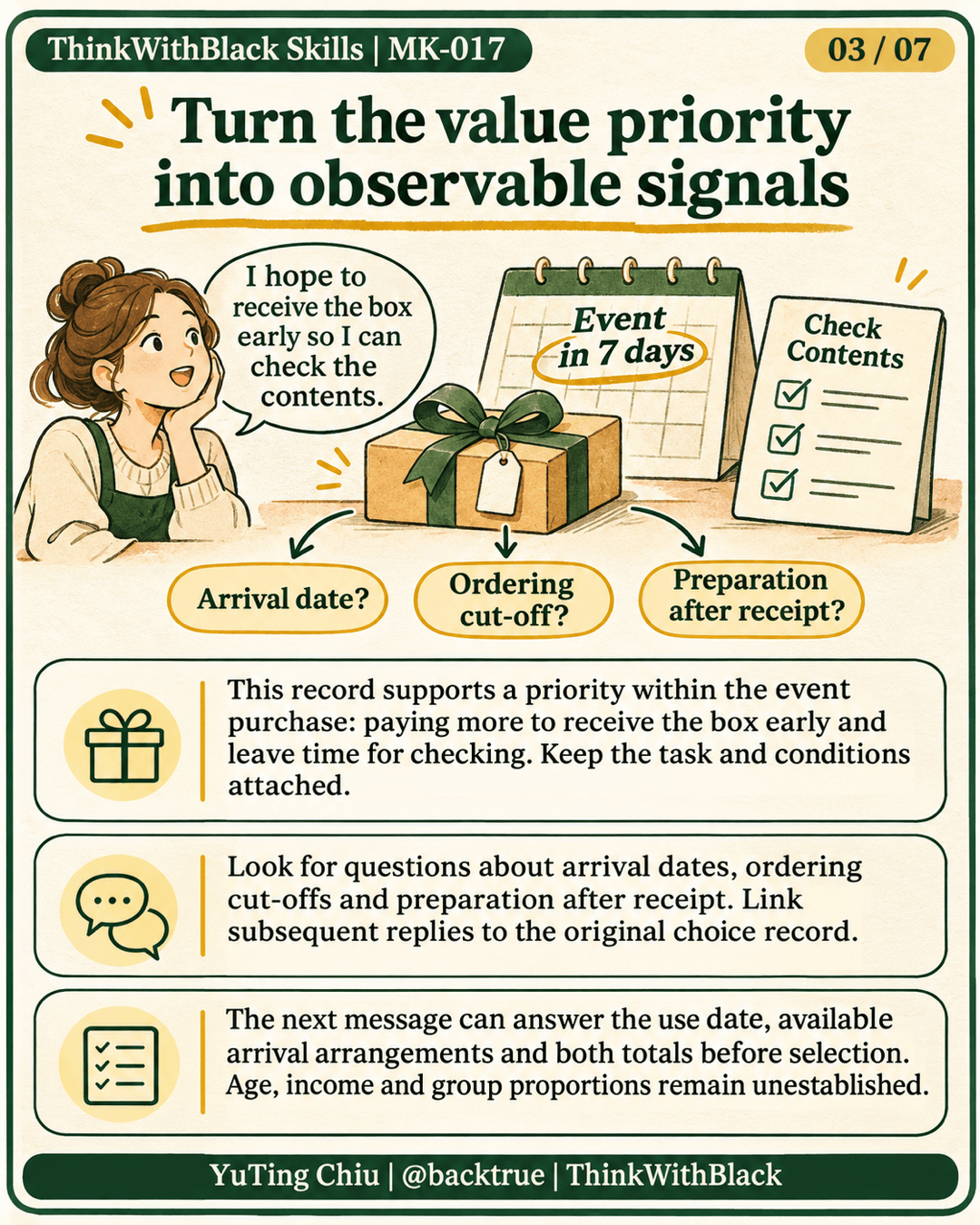
That reading gives the team something observable. Service can look for questions about arrival dates, ordering cut-offs and work that must happen after delivery. A willingness to pay more for earlier receipt under otherwise comparable terms can then be linked back to the original remarks
The next message can answer the intended use date, currently available arrival arrangements and both total prices before asking the customer to select. Copy has a reason to explain delivery conditions before moving into the contents and other product details
Keep the conclusion attached to this task: “For this event purchase, the customer paid more to have preparation time.” The record does not establish age, income, a general preference for premium brands or the share of customers who would make that choice
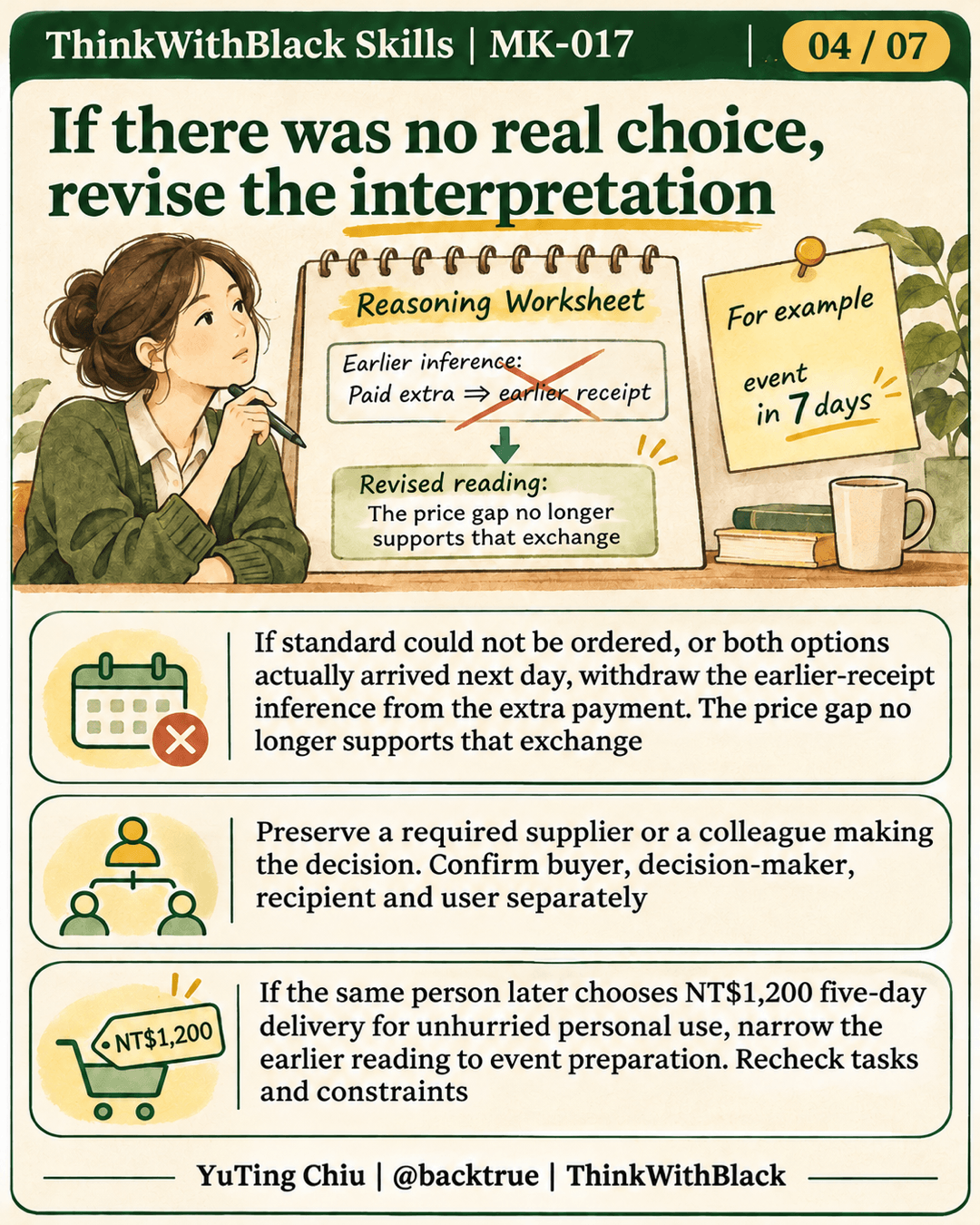
What if the customer did not really have a choice?
Rechecking availability can change the interpretation. If the standard option could not be ordered, or if both options actually arrived the next day, withdraw the inference that the extra payment bought earlier receipt. The price difference no longer supports that exchange
Preserve other constraints too. A company may require one supplier, someone else may specify the product, or a colleague may make the final decision. The payer and decision-maker may be different people. Keep the buyer separate from the gift recipient and eventual user
Another record can narrow the context. The same person may later buy for personal use without a deadline and choose the NT$1,200 five-day option. That choice brings the earlier interpretation back to event preparation; it does not require a new personality label
When words and behaviour appear to differ, check the task, deadline, available options and decision-maker. Those conditions tell the team how much of the earlier reading can guide the next conversation
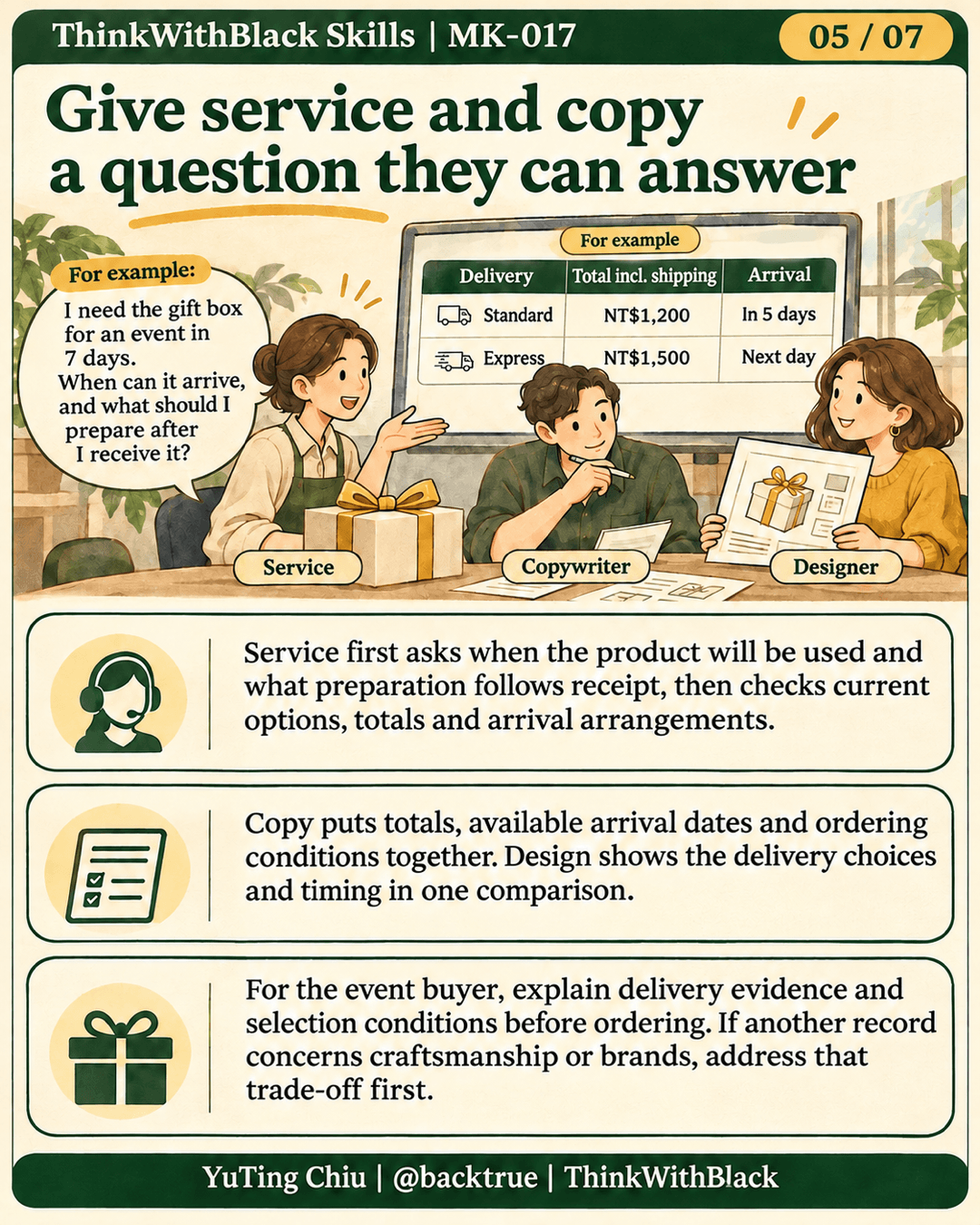
Give service, copy and design a question they can answer
Service can begin with: “When will you use it, and what do you need to prepare after it arrives?” Then check the currently available options, total prices and arrival arrangements. Any promised date must follow the delivery conditions confirmed for that order
Copy can put both totals, available arrival dates and ordering conditions together. Design can show the delivery choices and timing so that the customer can compare them in one place
The reading also guides the order of the conversation. In the event example, explain the delivery evidence and selection conditions before the ordering steps. If a different record shows the customer comparing craftsmanship or brands, provide the evidence for that trade-off first, then identify the remaining question
This is the funnel rhythm referred to in the method: the order in which someone learns, compares and decides, and which question the next message should address. MK-017 translates a supported value priority into observable signals and suitable messages
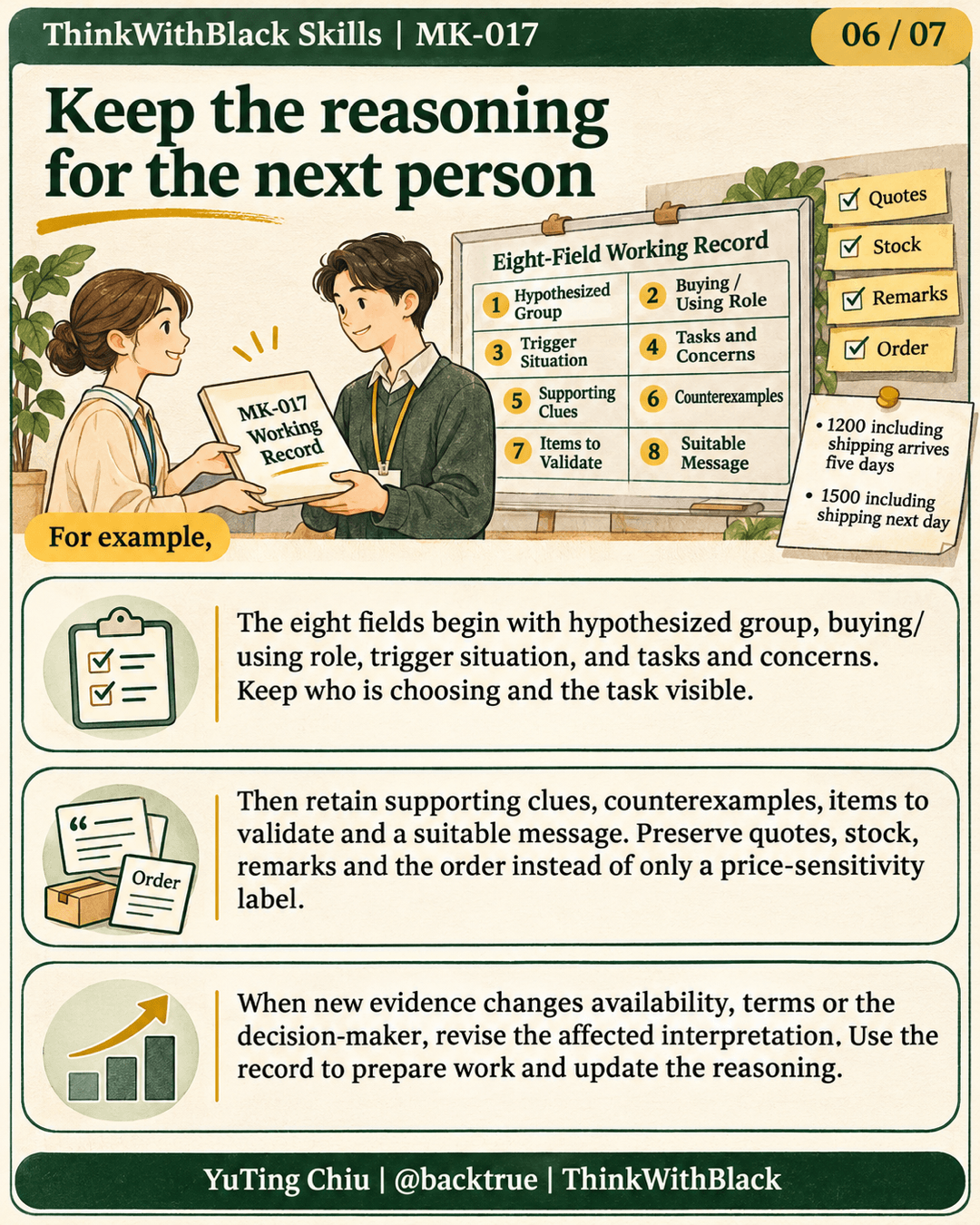
Keep the reasoning in the eight required fields
The method asks for eight fields so that the next person can recover the evidence and unfinished work. Here is how the gift-box example fits them
1. Hypothesized group
People who, when buying for an event, may pay more to receive the items early and leave time for checking. Keep this as a contextual candidate and compare it with further complete choice records
2. Buying/using role
The enquirer matches the paying order in this example. Event preparation is the stated use. Confirm the recipient, eventual user and whether another person made the final decision separately
3. Trigger situation
An event is seven days away and the buyer is selecting delivery. Five-day standard and next-day express both meet that deadline and were both in stock and available to order
4. Tasks and concerns
Receive the box early and leave time to check the event items. The extra NT$300 and original remarks support a preparation-time priority for this purchase
5. Supporting clues
The same contents, quality and payment terms; both shipping-inclusive totals; stock and delivery arrangements at the time; the original service remarks and matching order. Preserve their locations and dates
6. Counterexamples
Withdraw the earlier-receipt inference if standard could not be ordered, both options arrived the next day or another person specified the option. A standard-delivery choice for a different task narrows the original context
7. Items to validate
Check that both options were genuinely available, other terms were comparable, who made the decision and what preparation followed delivery. Priorities about quality, craftsmanship, brand or story, as well as demographics and group proportions, are not established
8. Suitable message
Confirm the use date and preparation work, then present currently available arrival arrangements, both total prices and ordering conditions. Link subsequent replies and the order back to the record
How Black developed MK-017
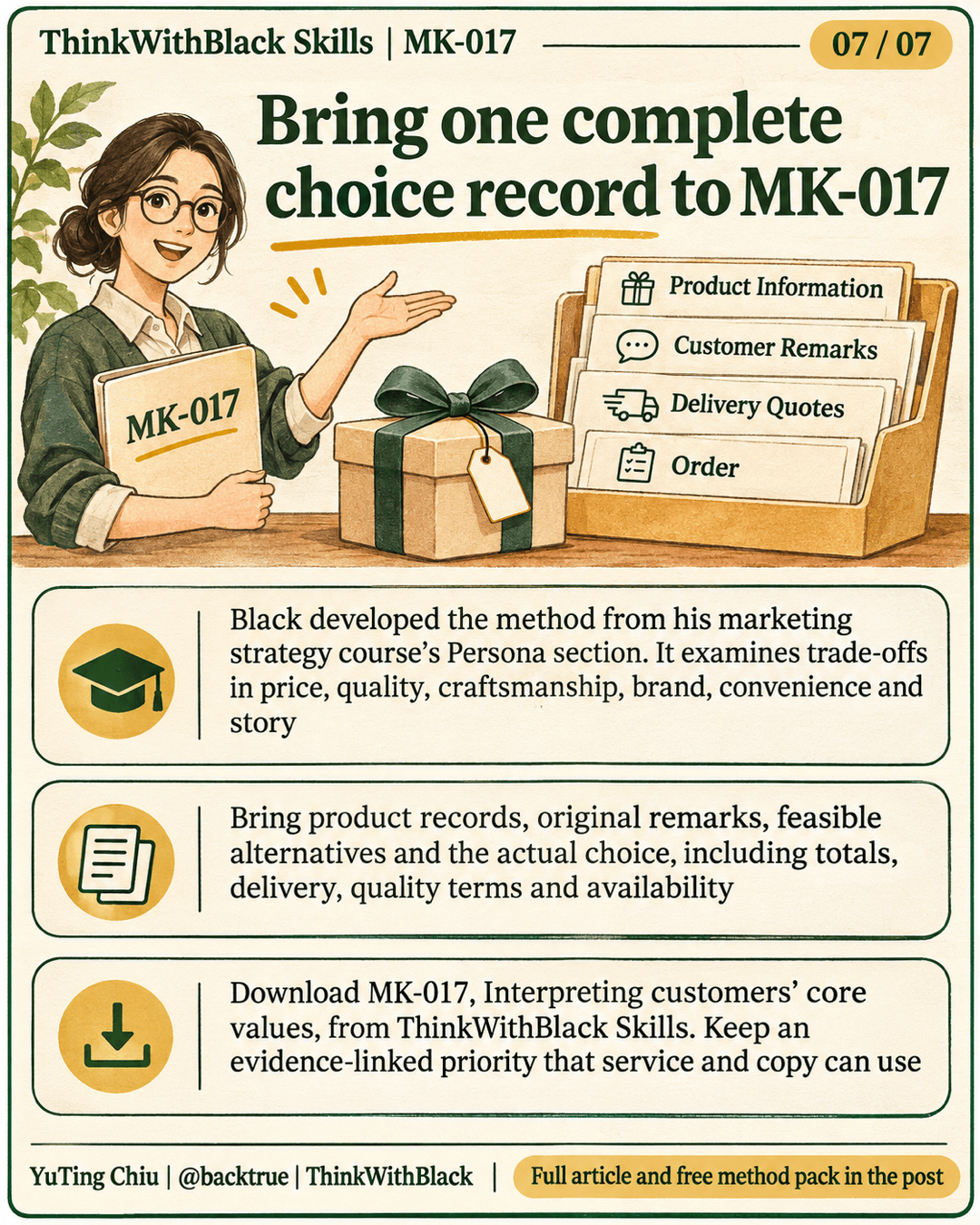
The method comes from the Persona section of 行銷策略實戰學程 Day1-小眾就是大眾 × 精準 Persona × 數位資產, Black’s marketing strategy course on niches, Personas and digital assets. It examines the standards customers use to judge value and translates supported priorities into observable signals and a useful order of explanation
The English MK-017 method pack sets out the checks for feasible alternatives, constraints, actual choices, counterexamples and withdrawal of an unsupported inference. Its decision rules are credited to ThinkWithBlack, dated 2026-10-14, alongside the original course source
Bring product records and one complete choice record: original remarks, feasible alternatives and the selected option, with prices, delivery, quality terms and availability. A starting request is: “Use MK-017 to interpret the customer’s core values. Preserve alternatives and constraints, identify the contextual priority supported by remarks and the actual trade-off, translate it into observable signals and a suitable message, retain counterexamples and unknowns, then deliver the eight required fields”
Get the free materials from ThinkWithBlack Skills. Start with the English INDEX.md, then upload the complete MK-017 method pack with your records. The next price enquiry can then be handled with a record of what to check and explain
This Skill on social media
Choose a platform to view the infographic and post